In 2025 and beyond, phlebotomy job roles will continue to offer a solid way to begin a healthcare career. As medical facilities expand their services, the need for skilled professionals who can collect blood safely and accurately is becoming more noticeable across clinics, hospitals, and labs.
This blog walks you through the key details of working in phlebotomist jobs—from daily responsibilities and training to pay expectations and where hiring is on the rise. Whether you are moving into healthcare from another field or shifting within it, you will find helpful steps to start strong in this role.
What you can expect from a phlebotomist job role
Phlebotomists are vital during the process of drawing blood for lab tests, transfusions, or donations. They play a key role in making sure blood samples are collected properly and on time. Along the way, they also reassure safety to patients and follow strict hygiene procedures to keep things safe.
Some of the typical responsibilities in this job role are:
- Drawing blood samples using clean equipment while following safety steps
- Labeling collected blood samples and getting them ready for lab work
- Keeping patients comfortable in the facility during the process of medical tests
- Maintaining clear patient records and following hygiene procedures
You will find phlebotomist jobs in settings like hospitals, clinics, outpatient labs, blood drives, and diagnostic centers.
Phlebotomy as a career transition path
In the healthcare sector, phlebotomy is a great option for healthcare workers who are changing roles or rejoining the workforce. People who have worked in patient care or public-facing jobs often find the role a good match. It offers hands-on experience without requiring years of schooling. Many professionals also transition into phlebotomy seeking a better work-life balance, especially compared to more demanding healthcare job roles.
It is especially suitable for those moving from roles such as:
- Certified Nursing Assistants (CNAs)
- Medical Assistants (MAs)
- Emergency Medical Technicians (EMTs)
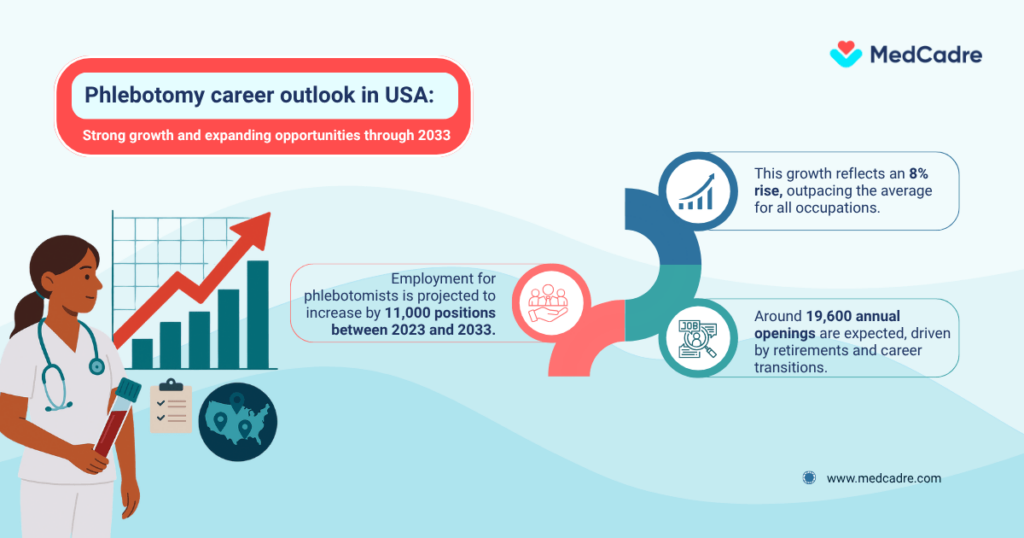
With flexible training and few barriers to entry, phlebotomist job requirements are within reach for most adults looking to shift careers. Over time, this role can also lead to other healthcare opportunities. As demand for diagnostic testing and outpatient services grows, the outlook for phlebotomist roles continues to rise across various healthcare settings, as explained below.
Certification requirements to become a phlebotomist
To apply for most phlebotomist jobs, you will need to finish an approved training program and pass a certification exam. These programs are offered at community colleges and accredited training centers. Most can be completed in less than 12 months and prepare you for direct patient care.
This section also gives insight into how to become a phlebotomist, especially for those unfamiliar with the process.
Popular certification providers include:
- National Healthcareer Association (NHA)
- American Society for Clinical Pathology (ASCP)
- National Center for Competency Testing (NCCT)
Some states may require extra steps, so it is important to check your local guidelines. Earning phlebotomist certifications also makes you a stronger candidate and can help you qualify for higher pay. Along with certifications, there are multiple reasons to partner with a healthcare staffing platform when looking for a better job, from access to exclusive openings to faster placements and built-in support.
Salary outlook for phlebotomist jobs
The phlebotomist’s salary is considered competitive for a role that does not require a degree. The average phlebotomy salary range is $43,130 a year. Those who hold national certifications or work in busy regions tend to earn on the higher end.
A few pay-related details to note:
- The phlebotomist’s hourly wage usually falls to $20.74
- Cities and high-demand areas often offer better pay
- Larger hospitals and labs tend to pay more than small offices
Knowing how location and employer type affect the phlebotomist salary can help you ask the right questions when applying. Below, you will find a clear breakdown of salary ranges by state to help you compare opportunities and plan your next steps.
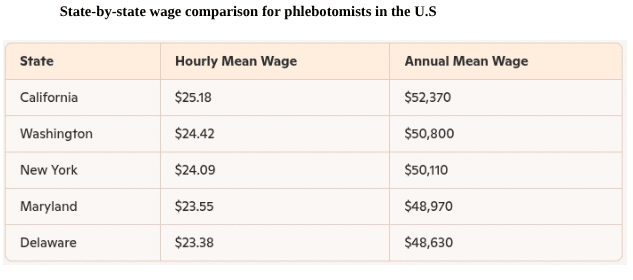
Source: www.bls.gov
Demand and growth in phlebotomy job roles
The need for phlebotomist jobs is expected to rise steadily through 2030. As more people rely on regular lab tests and outpatient care, phlebotomist jobs are becoming more common. The rise in mobile testing units and staffing gaps in rural clinics also creates new opportunities.
Employers who regularly hire phlebotomists include:
- Hospitals and specialty medical centers
- Independent and hospital-based labs
- Blood donation centers and mobile units
- Clinics, urgent care providers, and private practices
If you are searching for phlebotomist jobs near me, you will find roles in both busy cities and areas that need more medical support.
Finding the right path with smarter support, with platforms like MedCadre
Starting a career as a phlebotomist depends not only on training but also on how you find work. Some traditional staffing agencies still rely on outdated systems that slow down the process. As a result, you may experience lengthy wait times for updates, unclear pay details, and inconsistent support. These issues can make it more challenging to secure the right phlebotomy job or advance in your professional career.
To overcome these issues, you can utilize MedCadre, a healthcare staffing platform that leverages AI technology for enhanced services. To get places swiftly, you can submit your resume with details, and you can also review current openings matched to your experience and location, whether you are searching for phlebotomist jobs near me or exploring other healthcare jobs in different places. There is no need for long email chains or guessing where you stand.
Unlike many staffing agencies, MedCadre has a transparent pricing model that guarantees a significant portion of the bill rate is allocated directly to your pay, so you are not left wondering about your take-home income. The experienced recruiting team from MedCadre also keeps you updated on placement, paperwork, and any next steps without delay.
Using modern healthcare staffing platforms like MedCadre means you get assistance that respects your time and keeps your career goals in focus.
FAQs
What do phlebotomists do daily in a healthcare facility?
Phlebotomists draw blood samples from patients, label them accurately, and ensure proper handling for laboratory analysis. They also focus on patient comfort, follow strict safety protocols, and support diagnostic and treatment processes in various healthcare settings
How long does it take to become a phlebotomist?
Becoming a phlebotomist usually takes about 4 to 12 months through a training program at a vocational school or community college. After completing the program, you can earn certification and start applying for entry-level positions in healthcare settings.
Is phlebotomy a good career for someone switching from another healthcare role?
Yes, phlebotomy can be a great career for someone switching from another healthcare role, such as a CNA, MA, or EMT. It offers hands-on patient interaction, short training time, and potential for career advancement within the medical field.
Why should I use MedCadre to find phlebotomist jobs?
MedCadre is a user-friendly healthcare staffing platform that connects you to phlebotomist jobs with real-time updates and tailored job matches. It streamlines your job search with speed, transparency, and support throughout the hiring process.
Does MedCadre help with phlebotomist certifications?
While MedCadre does not provide training, it helps you find jobs that align with your phlebotomist certifications and keeps you informed about any compliance requirements before you are hired. This ensures you are well-prepared and qualified for each opportunity.