There is a growing need for mental health professionals because of the number of people looking for affordable and quality care. Increased awareness and reduced stigma have led to a growing need for services in hospitals and the community.
This blog will explain why this growth in mental health services matters both for occupational opportunities and for the patients waiting for care. It also highlights that opportunities in mental health jobs grow each year.
As care needs expand, the mental health workforce shortage creates challenges and opportunities for workers. Families, schools, and healthcare systems are looking for skilled employees to help them meet increased care needs across the country.
Increased need for mental health professionals
The increased need for mental health professionals comes from higher stress levels. Lifestyle challenges also contribute to this demand. The pandemic has added more pressure on mental well-being.
Many people experience anxiety, depression, or trauma. However, they often lack enough resources or support to manage these conditions effectively. This has caused more patients to need mental health professionals. They may see a therapist, counselor, or psychiatrist to get the care they need.
By 2025, the number of mental health job openings is expected to grow in hospitals, clinics, and private practices. Schools, community centers, and telehealth services will also need more professionals.
Millions are seeking treatment, while the services and teams of professionals providing that care struggle to keep up with the demand. The mental health workforce shortage indicates how significant this problem has become for our entire country.
Many states already face a shortage of qualified mental health professionals, resulting in long patient wait times for appointments. Delayed appointments increase the risk of deterioration.
As demand for care increases, the gap between patients who need care and professionals who deliver care continues to grow.
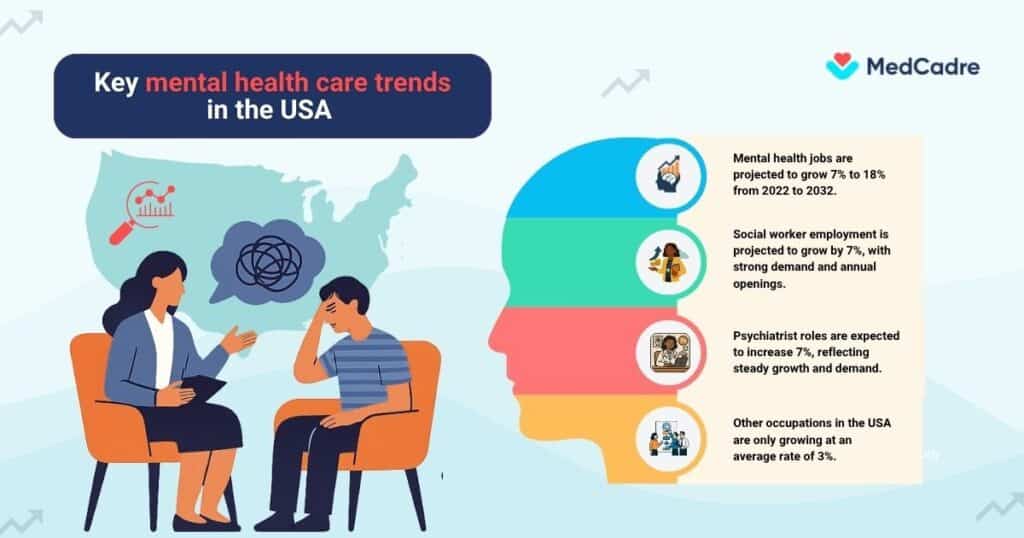
The projected employment growth and annual job openings from 2022 to 2032 in top mental healthcare occupations are highlighted, and a detailed infographic is included for better understanding.
Career outlook for mental health professionals
The mental health career outlook is extremely strong, offering stability, growth, and opportunities for rewarding jobs. For professionals looking to enter this sector, you can stay confident that there will be job security and stable advancement.
Job roles such as mental health therapists, psychologists, and counselors are in high demand in hospitals, schools, and community programs.
For example, the demand for mental health professionals is projected to grow much faster than average. Salaries generally vary by position and region, with competitive compensation rates available across all levels.
For example, when you apply for social worker jobs, therapist jobs, and counselor jobs, you are more likely to have reasonable starting salaries, with good potential for wage growth.
Meanwhile, psychiatrists and advanced practice providers can expect to earn more due to their training, specialization, and high demand. Most employers also offer extended benefits, including flexible work schedules and continuing education.
Opportunities are especially strong for:
- Licensed Clinical Social Workers (LCSWs)
- Mental Health Counselors
- Psychologists and Psychiatrists
- School and Pediatric Mental Health Specialists
Professionals applying for these mental health jobs can enjoy career stability while making a difference. Career pathways are also expanding through telehealth and remote counseling roles.
Workforce challenges in mental health care needs
The shortage of mental health professionals remains a substantial barrier, even with the rise in interest in the field. Many professionals work under heavy workloads and may experience burnout, which can detract from the quality of care.
Further, the shortage of mental health professionals is exacerbated in rural areas where services are often inaccessible. Hence, the need for mental health professionals is significantly greater in rural areas than in urban areas.
Educational programs exist to prepare a sufficient number of students and graduates to fill the expanding number of mental health job openings. The lack of clinical training sites reduces the number of students who earn licensure, which would enable them to enter the field.
Although new workforce roles are being added, hiring often cannot keep up with the need for mental health services. The workforce shortage increases the strain on facilities to improve hiring and retention.
Policy initiatives or increased financial funding for such training initiatives may yield positive outcomes. Increased investments in telehealth programs may also reduce accessibility barriers and alleviate provider shortages.
Career paths and salary expectations for mental health professionals
The demand for mental health professionals translates to an interest in jobs for those entering the field. Applying for mental health positions, such as those in therapy, counseling, or psychology, opens the door to numerous opportunities.
These roles can be found in hospitals, clinics, schools, or private practice. Recruiters will always be interested in hiring qualified candidates to meet crucial mental health care needs.
Professionals can pursue mental health careers with the knowledge that there are numerous career paths available.
There are opportunities focusing on children and adolescents, and opportunities associated with addiction, trauma, or geriatric work.
This knowledge allows workers to select complementary opportunities that align with their interests.
The mental health career outlook is also trending toward more telehealth roles, providing flexibility to deliver care remotely.
Salary expectations are expected to improve, especially for those who develop specialized skills. With the right skills, professionals can build a reliable and rewarding career in this area.
For example, a licensed clinical social worker (LCSW) can expect a competitive starting salary with room for growth.
A detailed infographic on the salaries of social workers in the USA is provided below for better understanding.
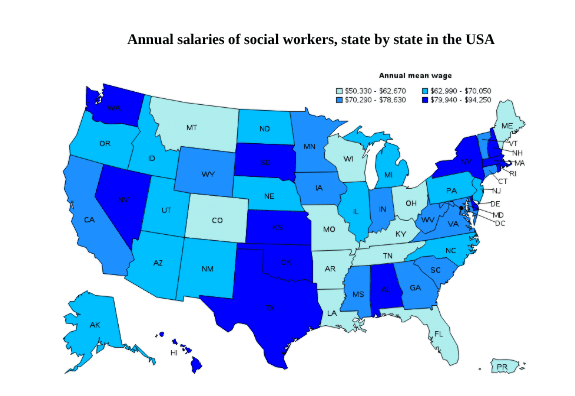
Source: www.bls.gov
Maximizing mental health career success with an advanced staffing platform
With the demand for mental health professionals growing, there are many opportunities available for qualified job seekers. For qualified professionals to capitalize on this demand, there are two important requirements.
- First, possessing certifications or skills that validate you within today’s healthcare market.
- Second, partnering with a flexible staffing platform dedicated to healthcare professionals.
Many professionals use free job boards. In prime hiring locations, it quickly becomes impossible to find the right job without endless trying. Delays often push professionals toward staffing agencies, which are expensive, slow, and often lack transparency.
To reduce these barriers, consider a modern staffing platform built for healthcare, such as MedCadre, which provides:
- The simple application process helps you manage your job search without affecting your current work.
- Clear pricing makes sure more of your pay comes directly to you, so you know your earnings.
- AI-based credential checks speed up hiring by 30%, letting you start on time without delays.
- Built-in timesheets enable fast approvals, ensuring accurate and on-time payments.
With MedCadre, you can explore opportunities on demand by visiting the current openings page and applying to positions that match your skills.
If you cannot find a job role that fits your skills and requirements, you can submit your resume. This will connect you with positions that align with your career goals. Choosing the right platform saves time, avoids delays, and helps you step into a fulfilling career sooner.
FAQs
What types of healthcare facilities hire mental health professionals?
Hospitals, clinics, private practices, schools, community centers, and telehealth services regularly hire mental health professionals.
Are there opportunities for mental health professionals in rural areas?
Yes, rural areas often have higher demand, providing more opportunities for licensed professionals to serve underserved communities.
What skills are essential for mental health professionals?
Effective communication, empathy, clinical expertise, problem-solving skills, and knowledge of therapy or counseling techniques are essential.
Why should I choose MedCadre over other staffing platforms?
MedCadre offers verified jobs, compliance support, cost-effective solutions, payroll management, and a dedicated healthcare-focused network.
Are there temporary or part-time mental health roles available through MedCadre?
Yes, MedCadre offers flexible staffing options, including full-time, part-time, and per diem positions.