Licensing ensures healthcare professionals meet their state RN requirements and practice safely and legally. Each state sets its own regulations for RNs, LPNs, and allied health workers. Understanding these standards helps professionals remain compliant and ensures patients receive quality care. Understanding these requirements enables professionals to stay compliant, avoid delays, and consistently deliver high-quality care.
This blog explains to you the key RN licensing requirements by state. It also covers LPN licensing requirements and rules for allied health workers. Detailed information helps both professionals and employers plan with confidence.
Understanding licenses for RNs and LPNs
Registered nurses (RNs) and licensed practical nurses (LPNs) play a vital role in healthcare delivery. To ensure quality patient care, RNs must complete an accredited nursing program and pass the NCLEX-RN exam. Similarly, LPNs need to complete a practical nursing program and pass the NCLEX-PN exam.
State boards set registered nurse license requirements. They also define LPN requirements, which may include exams, education, and background checks.
Aspiring nurses should review LPN requirements by state so that they are ready to apply for LPN positions and RN roles. As an experienced professional, you must always double-check deadlines so your application is not delayed.
Key points to check for RN and LPN licenses:
- Ensure completion of accredited nursing programs
- Pass the required NCLEX exam for your role
- Verify state-specific requirements and background checks
The nurse licensure compact (NLC) and its impact
The nurse licensure compact (NLC) allows nurses to hold one license valid in multiple states. Meeting RN licensing requirements by state gives RNs and LPNs flexibility. It also lets them apply for nursing jobs in compact states easily.
Nurses working across states may also find salary differences, so checking pay rates before applying helps them plan their career. Nurses who meet RN licensing requirements in each state can join the compact.
They can then work in multiple states without having to repeat the full process. Nurses in non-compact states must apply separately in each state.
Understanding LPN requirements or RN standards is crucial when planning multi-state practice. Check if your state is part of the compact before applying, and consider reviewing salaries in different states to make an informed decision. An infographic image is added for better understanding of salaries.
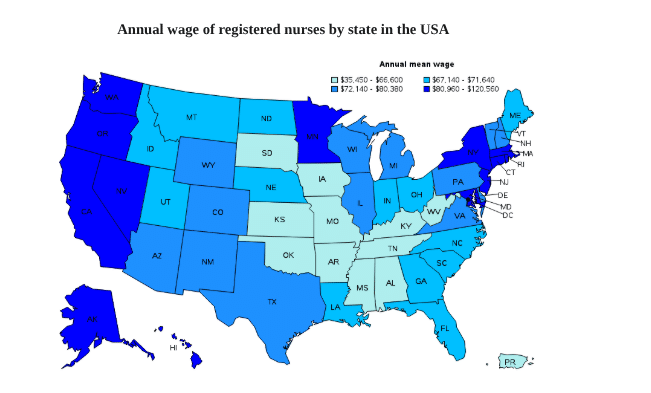
Source: www.bls.gov
Licensing requirements for allied health workers
Allied health professionals include medical assistants, radiologic technologists, dental hygienists, and more. Each profession has state-specific licensing or certification requirements.
Be sure to carefully check the CNA requirements by state. Once licensed, you can actively apply for CNA roles. Similarly, reviewing other allied health requirements early helps you apply for allied health positions in your state without delays. Some roles, such as medical assistants, require state exams, while others follow national certification boards..
Certain professions also require continuing education to maintain licensure. You should review the CNA requirements by state before sending your application. It is also important to check other allied health requirements in advance. Checking details early helps avoid last-minute stress when applying.
Allied health licensing tips to consider:
- Confirm the exam or certification requirements for your state
- Keep copies of credentials for verification purposes
- Track continuing education requirements for license renewal
Tips for navigating state licensing processes
Research is key to handling licensing successfully. As an allied healthcare professional, ensure you check the official state board websites for the latest requirements for allied healthcare roles, such as ultrasound technician license renewal. Additionally, review the site for the specific requirements of ultrasound technicians by state. Most applications need fingerprinting, background checks, and proof of education.
Allied healthcare worker moving to a new state should check their licensing requirements by state. They should also review license fees. Track continuing education credits and plan license renewals in advance. Keeping a checklist makes the process easier to follow step by step.
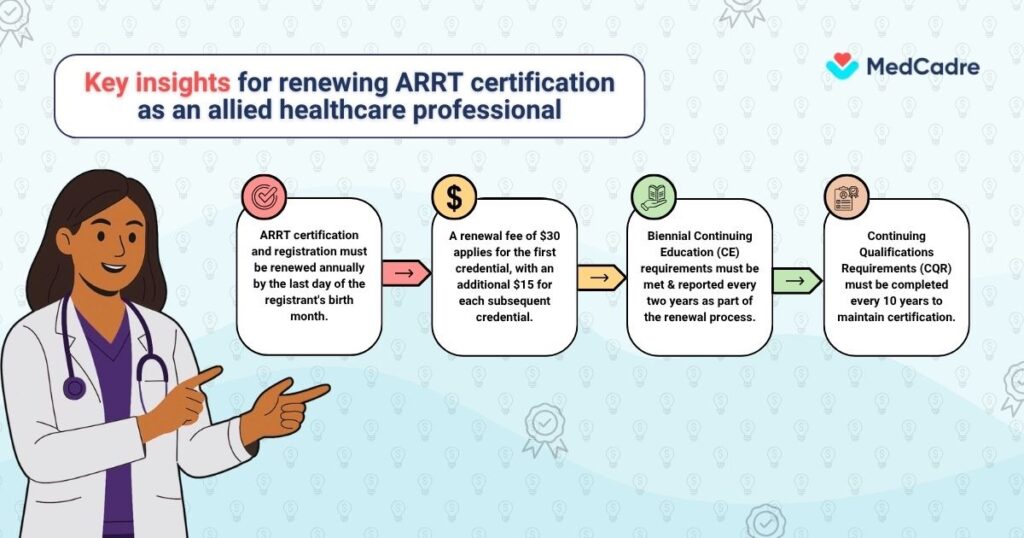
For example, in the USA, ultrasound technician certification renewals through the ARRT require annual online renewal by the last day of the registrant’s birth month.
Plan ahead to avoid delays. Track continuing education credits required every two years as part of the ARRT renewal process and renew your certification on time. Use a checklist to easily follow each step of the renewal process. Key renewal points are highlighted in the infographic for better understanding.
Unlocking career opportunities with modern staffing platforms
When searching for healthcare jobs, such as Registered Nurse (RN) or Licensed Practical Nurse (LPN), proper licensing is important. If you plan to work across multiple states, having the required certifications ensures you qualify as a trusted candidate. But certifications alone are not enough to secure the right role. You must also use the right staffing platforms to guide your job search.
Many professionals try free job portals, but the results are often limited or inconsistent. Others choose traditional staffing agencies, but these partnerships can create challenges. Some of the most common issues include high agency fees, slow hiring timelines, and limited compliance support. These barriers can make it more challenging to secure your dream job in the healthcare field.
To reach your career goals, a better option is choosing a modern healthcare staffing platform like MedCadre. Instead of facing delays or hidden costs, MedCadre helps you focus on growth. This platform has multiple benefits.
Key benefits include:
- A flexible application process that lets you manage your job search at your own pace
- We offer transparent pricing so you receive a fair share of the billing rate
- Quick credentialing that speeds up processing by nearly 30%, ensuring faster job starts
- An AI-integrated timesheet for quick approvals, accurate records, and on-time payments
These advantages make MedCadre a reliable partner for your healthcare job search. To take the next step in your career, check our current openings page and submit your resume today. This way, you can secure a job that fits your skills and supports your professional growth.
FAQs
Why is state licensing essential for experienced healthcare professionals?
Licensing ensures that you practice legally and maintain high standards of patient care. It also protects your professional reputation and helps recruiters trust your qualifications. Maintaining a license demonstrates that you meet state regulations and professional standards.
Do I need to meet continuing education requirements as an experienced nurse?
Yes, states often require continuing education to renew licenses. Track your credits to avoid delays and stay current with the latest healthcare practices. Completing these courses helps keep your skills current and maintain compliance.
How often should I verify the status of my RN or LPN license?
Check your license annually and before applying for jobs in another state to ensure compliance and readiness. Regular verification prevents unexpected issues and ensures your credentials remain valid, allowing for seamless application.
Can MedCadre help experienced nurses apply for jobs across multiple states?
Yes, our platform efficiently ensures you meet RN or LPN licensing requirements by state. It also helps you quickly find suitable roles and easily manage your applications across different states.
Is MedCadre better than traditional staffing agencies for experienced professionals?
Yes, traditional agencies may have unpredictable fees, slow recruitment, and limited compliance support, whereas MedCadre streamlines all these processes. MedCadre also provides faster credentialing, transparent pay, and a smoother path to your ideal healthcare role.