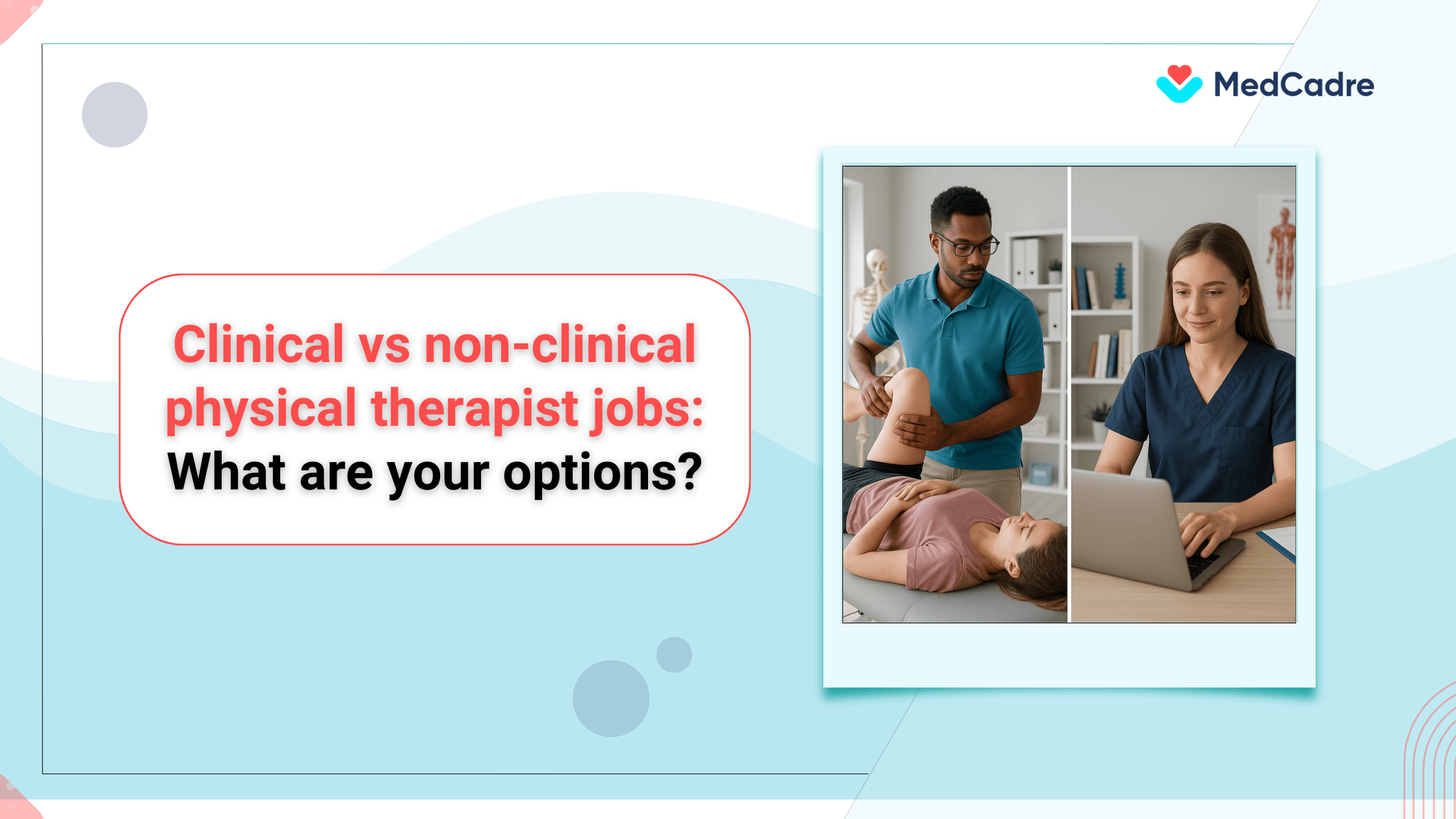
Physical therapists have numerous career paths in their field. Some work directly with patients, while others focus on research, education, or administration. Understanding the differences between clinical jobs and non-clinical physical therapy jobs helps you plan a career that fits your interests and goals.
This helps you plan a career that fits your interests, lifestyle, and growth goals. Many professionals explore options based on their long-term physical therapy career goals.
Physical therapists need to understand their career options to succeed in their profession, whether they are new to the field or considering a career change. The exploration of medical and non-medical career options enables you to discover the right combination of work flexibility, financial benefits, and job contentment. Some therapists compare physical therapy jobs to determine which path best suits their needs.
Understanding clinical jobs for physical therapists
Clinical jobs require healthcare professionals to deliver patient care focused on enhancing movement, reducing pain, and promoting healing. Clinical positions are mainly found in hospitals, outpatient clinics, rehabilitation centers, and home health care settings. Therapists often compare multiple clinical jobs before choosing their healthcare setting.
The primary duties of Clinical PTs include patient evaluations, treatment plan development, and exercise instruction to enhance movement abilities. The positions require both clinical expertise and valid professional credentials, as well as excellent interpersonal skills.
Working in clinical environments enables PTs to witness immediate results from their treatment and to develop strong bonds with their patients. The job can be physically demanding, and employees must work during night shifts and weekends. Many professionals choose clinical jobs to gain direct patient care experience.
Common clinical work settings
Physical therapists work in various clinical settings and choose their work environment based on both their practice specialty and their patients’ healthcare needs. The urban hospitals admitted patients with severe medical conditions, while the outpatient clinics treated those who needed less critical care. Home health physical therapists visit patients at their residences to deliver individualized treatment through home-based therapy sessions.
Clinical physical therapists base their work environments on their specialized field and the requirements of their patients. Urban hospitals treat patients who need critical care, and outpatient clinics may see patients with less critical medical needs. Home health PTs provide care services to patients at their residences by delivering individualized treatment plans in home environments.
The points below highlight why these settings function differently and why each is important in patient care:
- Hospitals, along with outpatient rehab centers, deliver direct patient care while providing specialized practice opportunities.
- The primary mission of nursing homes, along with assisted living facilities, is to provide continuous care for extended periods.
- Home health care enables physical therapists to provide individualized treatment in the comfort of their patients’ homes.
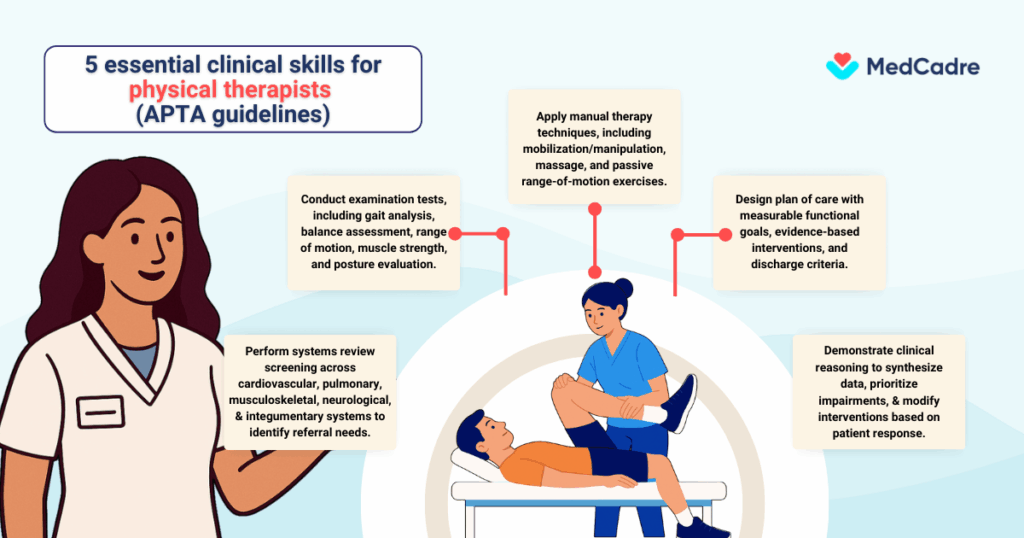
Along with these points, you must remember that it is essential to stay up to date with the skills required for the role. A detailed infographic is included to provide clearer insight into the core clinical skills.
Exploring non-clinical jobs for physical therapists
Non-clinical physical therapy jobs allow professionals to apply their PT expertise in work settings that do not involve patient contact. The healthcare industry offers these positions through research activities and educational roles, consulting tasks, corporate wellness programs, and medical writing responsibilities. Some PTs shift to non-clinical pathways to explore broader physical therapy career opportunities.
The daily work requirements differ by position: some involve creating educational content, while others focus on producing written materials and supporting companies with their staff wellness initiatives. People in non-clinical roles must possess excellent planning skills, effective communication, and strong management capabilities.
The majority of PTs choose non-clinical duties because they offer a more flexible schedule and are not physically demanding. The program provides limited creative freedom, limiting both the therapist’s ability to modify their practice and their potential to influence professional development. Many PTs compare non-clinical physical therapy jobs when seeking less demanding work.
Examples of non-clinical opportunities
The wide range of non-clinical physical therapy positions offers options that match diverse interests and skill sets. Some universities may employ PTs for teaching and research, while others may have PTs join their staff purely for wellness programs, software consulting, or policy advising.
The following examples show how non-clinical roles provide unique opportunities and benefits for PTs.
- Corporate wellness programs help employees stay healthy and prevent injuries
- Universities and research labs allow PTs to teach and advance the field
- PT technology companies and consulting firms create tools and programs to improve patient care
Clinical and non-clinical PT careers comparison
Clinical and non-clinical roles differ in many ways. Clinical physical therapists’ working hours are dedicated to patient care, while non-clinical physical therapists perform duties related to education, research, and administration. People work different shifts and engage in various physical activities while pursuing other career advancement trajectories. Knowledge of these distinctions enables physical therapists to choose their professional path and personal way of life. This also helps them compare different physical therapy jobs during career planning.
Work hours, physical activity, and career progression also vary. The fundamental differences between these two groups enable physiotherapists to determine their proper career path and life approach.
Salaries are also highly dependent on the role. Clinical staff members receive compensation based on their working hours and the number of patients they treat. Non-clinical jobs might receive a salary based on the scope of the project or the manager’s level. Many professionals look at physical therapist salary data to guide their choices, especially when they plan to apply for a physical therapist job, since salary ranges can influence their decisions.
Physical therapists can use this comparison to determine their most suitable career path based on their physical therapy job requirements and their long-term career satisfaction.
Important considerations
People decide their work path between clinical and non-clinical roles based on personal preferences, life balance needs, and future objectives. The evaluation process demands studying the environment and assessing patient contact levels and career advancement possibilities. Your professional and personal goals will find support in the choices you make when evaluating these components. The details below illustrate the differences between clinical and non-clinical environments and why each is important for career planning:
- The two types of work environments present different levels of job security and work-life equilibrium for employees.
- Clinical positions require extensive patient contact, whereas administrative roles require only minimal patient contact.
- The path of career advancement depends on which area of specialization, management level, or educational direction you pursue.
Tips for choosing the right PT career path
You must start by identifying the subjects that interest you most. The option of clinical work would suit those who find satisfaction in performing physical care tasks.
Physical therapists who want to teach, conduct research, or work in administrative roles should look at non-clinical physical therapy positions. Students gain crucial career information about various professional paths through shadowing programs, internships, and informational interviews.
The process of gaining additional education and earning certifications results in new career opportunities that strengthen your professional position. Researching local opportunities helps you make informed decisions about your next step.
Planning your next step
Through job market exploration, we find key information about salary ranges and required job qualifications, and available work locations. You need to conduct a thorough assessment of all available positions to identify which ones align with your professional goals.
The following suggestions highlight steps to explore and evaluate opportunities effectively:
- Search for physical therapy jobs near you to find local opportunities.
- Review physical therapist salary trends to plan your career.
- Consider certification or continuing education programs to expand your options.
While planning to join a new job or searching for a new role as a professional, you must research and be aware of the salaries for this position. A detailed infographic is provided to help you better understand this.
Annual wage of physical therapists in the USA

Source: www.bls.gov
Plan your next physical therapy career move with MedCadre
When searching for a new job or making career plans, you need to decide between clinical and non-clinical physical therapy jobs. The decision you make about your career path will determine the requirements you need to fulfill to achieve your professional goals.
Free job platforms should not be your only resource, as they often show outdated listings that have already been filled. Your career transition will take longer because you need to spend extra time on this process. Many job seekers also partner with traditional staffing agencies without proper research or planning. The agencies operate slowly, with their payment process unclear and their fees still expensive.
The process will create obstacles that prevent you from moving forward at the pace you desire, while you lose control over your professional advancement. To overcome these challenges, choose a modern healthcare platform such as MedCadre.
This modern healthcare staffing platform, powered by AI, offers a flexible application system that lets you find new career opportunities while maintaining your current job responsibilities. The platform ensures that the majority of the bill rate is paid directly to you, for clarity and fairness. MedCadre also speeds up the hiring process using AI in healthcare, reducing credentialing time by approximately 30%.
MedCadre, a healthcare staffing platform, features an integrated timesheet system that streamlines approvals and ensures timely payment. For job seekers, this means reliable support, faster placement, and a smooth process at every step. MedCadre delivers real value to healthcare professionals who want to advance their careers and explore physical therapy jobs cost-effectively and efficiently.
You can explore available roles on the current openings page. If no role matches your requirements, you can submit your resume to connect with positions that support your goals. Using this approach ensures you find the right physical therapy career and transition smoothly into your ideal job.
FAQs
What is the difference between clinical and non-clinical physical therapy jobs?
Clinical physical therapy jobs involve direct patient care, such as evaluations, treatments, and exercise programs. Non-clinical roles focus on research, teaching, administration, or wellness programs without patient contact.
Can I switch from a clinical to a non-clinical physical therapy career?
Yes, many physical therapists transition after gaining clinical experience. Additional certifications, training, or shadowing programs can help with the shift.
Is prior clinical experience required for non-clinical positions?
Many non-clinical jobs prefer candidates with clinical experience, but it is not always mandatory. Demonstrated skills in education, management, or research can be sufficient.
Can I switch from a clinical to a non-clinical role using MedCadre?
Absolutely. MedCadre supports career transitions by connecting you with roles that match your skills and goals in either field.
Can I explore part-time or flexible physical therapy jobs near me with MedCadre?
Yes, MedCadre lists flexible opportunities, including part-time, contract, or project-based roles in clinical and non-clinical settings