Allied health professionals assist with crucial aspects of patient care in healthcare facilities, including diagnostics and rehabilitation. Allied health jobs remain in strong demand as facilities in the USA continue to experience a workforce shortage and a rise in patient volume.
There is a wide range of job opportunities in this field. This blog will explain some of the most in-demand allied health jobs that promise stability, growth opportunities, and long-term relevance in today’s healthcare system.
What makes an allied health job in-demand?
As the number of patients continues to rise, so needs of allied health professionals. This increased demand for professionals is fueled by the growing number of chronically ill and sick people, and the trend toward outpatient and preventive care.
These professionals work in healthcare facilities to deliver quality patient care and keep daily operations running smoothly. Their direct impact on patient outcomes and efficiency continues to drive the growing demand for allied health jobs
Many allied health professional roles will require specialized training or certification in addition to hands-on experience and the ability to demonstrate a high level of technical or patient care expertise.
Allied health professionals play a vital role across a wide range of healthcare settings by supporting accurate diagnosis, effective treatment, and ongoing patient care. Their work directly contributes to better patient outcomes while helping healthcare facilities meet the evolving needs of today’s workforce.
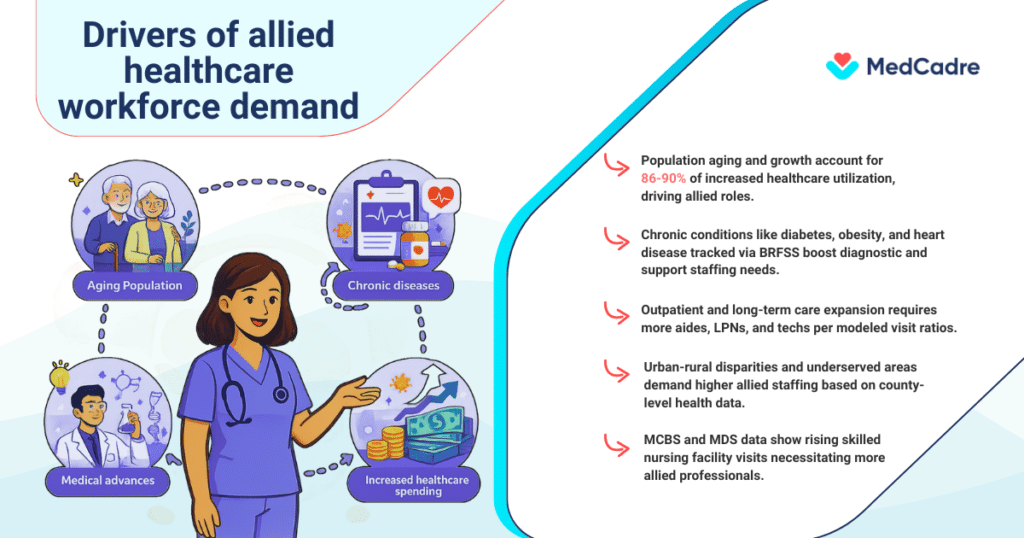
Before you apply for allied health roles in the healthcare sector, it is an added advantage to understand why these positions are in high demand, and a detailed infographic is included below to provide better insight into the key driving forces behind allied healthcare jobs, such as when candidates apply for medical assistant positions across hospitals and outpatient facilities.
Most in-demand allied health jobs in the USA
These professionals assist in necessary activities related to patient care coordination, clinical support services, therapeutic assistance, and healthcare operations. As facilities in the USA continue to face staffing challenges, the demand for professionals has continued to rise, strengthening the need for reliable allied health jobs. These professions offer a broad range of employment opportunities across settings such as hospitals, clinics, laboratories, and outpatient centers.
This blog outlines the most in-demand allied health careers that enable individuals to secure jobs with career security, career advancement, and long-term relevance in today’s healthcare system. The top allied health jobs and their key responsibilities are explained in detail below.
1. Medical laboratory technician
Medical laboratory personnel perform diagnostic procedures that aid doctors in detecting, diagnosing, and treating various medical conditions. This is done indirectly, as part of the treatment processes.
Required certification: The Medical Laboratory Technician (MLT) certification is offered through the American Society for Clinical Pathology (ASCP)
Salary: Median hourly wage is $25.54, and median annual wage is $53,120.
2. Radiologic technologist
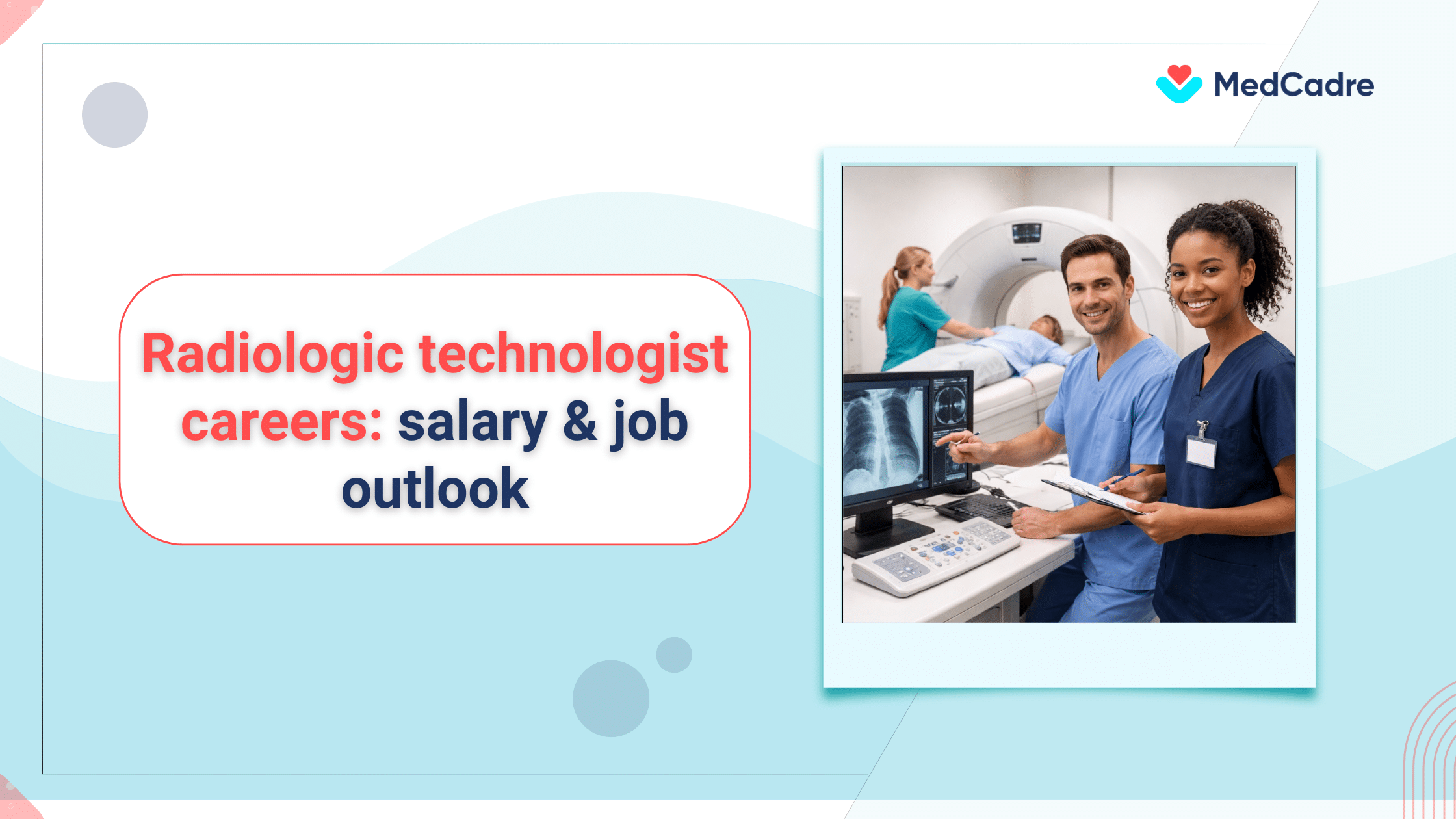
Radiologic technology provides imaging to evaluate a patient’s condition using imaging equipment. Radiologic technologists work with patients and the equipment used to ensure the imaging procedure is safe and completed according to established guidelines.
Required certification: Computed Tomography (CT) – American Registry of Radiologic Technologists (ARRT)
Salary: Median hourly wage is $31.32, and median annual wage is $65,140.
3. Physical therapist assistant (PTA)
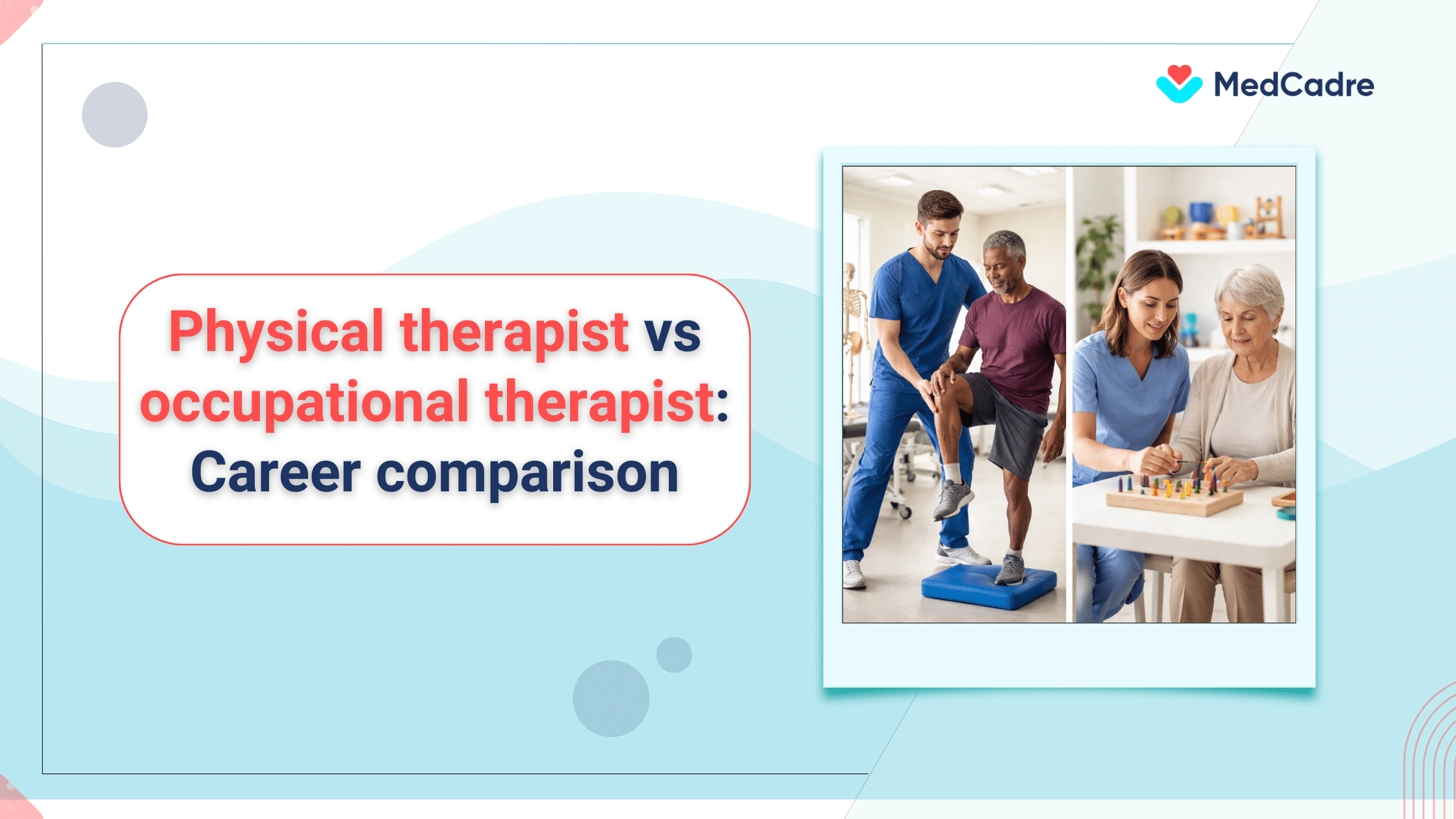
When you apply for physical therapist assistant jobs, you must understand that these professionals assist patients in regaining their strength and mobility, working under the supervision of a licensed physical therapist. Physical therapist assistants are a significant aid to the rehabilitation process after an injury, surgery, or chronic condition.
Required certification: Cardiovascular and Pulmonary Clinical Specialist from The American Board of Physical Therapy Specializations (ABPTS)
Salary: Median hourly wage is $30.81, and median annual wage is $64,080.
4. Occupational therapy assistant (OTA)
Occupational therapy assistants help patients acquire or regain the skills needed for daily living and work. They work specifically to strengthen their patients’ independence and quality of life from infancy to older adulthood.
Required certification: National Board for Certification in Occupational Therapy (NBCOT).
Salary: Median hourly wage is $32.22, and median annual wage is $67,010.
5. Respiratory therapist
Respiratory therapists assist patients with respiratory issues or heart/lung disorders in both acute and long-term care settings, with a high level of expertise in emergency and intensive care.
Required certification: Certified Respiratory Therapists (CRTs) by the Commission on Accreditation for Respiratory Care (CoARC)
Salary: Median hourly wage is $37.48, and median annual wage is $77,960.
6. Pharmacy technician
Pharmacy technicians work with the pharmacist to prepare medicine, handle prescriptions, and support the overall operations of the pharmacy; they can be found in hospitals, retail locations, or other pharmacies offering specialized services.
Required certification: PTCB’s CPhT Program is nationally accredited by the National Commission for Certifying Agencies (NCCA).
Salary: Median hourly wage is $19.37, and median annual wage is $40,300.
7. Medical assistant
The medical assistant provides support to providers in both administrative and clinical capacities to deliver effective patient care. They are so versatile that physician offices and outpatient clinics rely on them.
Required certification: Certified medical assistant (CMA) by the American Association of Medical Assistants (AAMA).
Salary: Median hourly wage is $20.19, and median annual wage is $42,000.
8. Speech-language pathology assistant (SLPA)
As a speech-language pathology assistant, you assist a licensed speech-language pathologist (SLP) in helping people of all ages with their communication and swallowing challenges. SLPAs have the opportunity to work in schools and other settings, including facilities.
Required certification: ASHA-Certified Speech-Language Pathology Assistant (C-SLPA) by the American Speech-Language-Hearing Association.
Salary: Median hourly wage is $42.93, and median annual wage is $89,290.
9. Diagnostic medical sonographer
Sonographers are diagnostic medical professionals who use ultrasound technology to create medical images that help diagnose and treat patients. Precision, skill set, and ability to interact with patients are very important in this profession.
Required certification: Registered Diagnostic Medical Sonographer (RDMS)®
Salary: Median hourly wage is $39.11, and the median annual wage is $81,350.
10. Health information technician
Health information technicians are tasked with maintaining and organizing patient medical records so that they contain complete and accurate information. The role of a Health information technician supports compliance in the system and the clinical decision-making process by providing accurate and complete data.
Required certification: Registered health information technician (RHIT) by the AHIMA (American Health Information Management Association).
Salary: Median hourly wage is $32.36, and the median annual wage is $67,310.
Education, skills, and certifications needed for allied health careers
Most of the allied health careers require a certificate, associate degree, or bachelor’s degree from an accredited program. Certification and licensure mean professionals have met accepted industry standards and regulatory requirements.
In addition to certifications, excellent communication skills, strong attention to detail, and technical knowledge are essential for all allied health workers, including working with computers, machines, and medical devices. Continuing education provides the opportunity for continued specialization and advancement in one’s field.
How to choose the right allied health career?
Personal preferences, including an individual’s interests and/or preferred working environment, and educational timelines, are important factors when selecting an Allied Health career. Some careers involve direct patient care, while others focus on diagnostic or administrative duties.
By learning about a career’s certification requirements, physical limitations, and growth potential, individuals can make an informed decision that will ultimately allow them to achieve their career aspirations. Additionally, the factors listed above will help you find the best allied health job platform and successfully transition into that career.
Allied health jobs remain progressive as changes in the healthcare environment and a growing patient population fuel development. Improved technology and greater accessibility are opening doors in a broad range of fields.
In the USA, allied health careers offer long-term stability, with career paths that can be tailored and a constant demand for services. The U.S. healthcare industry can always hire qualified professionals, as most facilities are currently seeking employees.
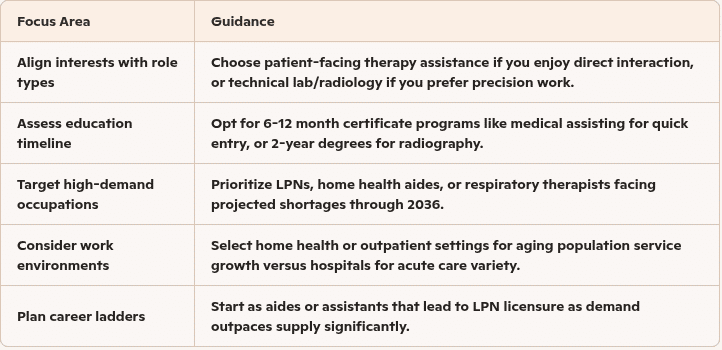
It is an excellent time to look for work. To help you make an informed decision, a detailed infographic is included below that explains how to choose the right allied healthcare career by highlighting key factors and vital considerations
How to choose your ideal allied health career
Source: aspe.hhs.gov
Build the right career path with the right staffing partner
To build a professional life that can sustain itself, you need to have a good understanding of all potential jobs within the healthcare system that meet your skill set, interests, and future growth potential. Obtaining a clear understanding of the variety of allied health careers available will enable you to build your own career path through informed and purposeful choices that lead to professional development, job fulfilment, and overall career growth.
As you search for jobs, it is essential to understand what procedures to avoid. One is avoiding most free job portals, which can lead to delayed responses, unverified job postings, and a lack of personalised support.
In the same way, traditional staffing agencies may also come with a few cons, such as slowing down the job search process due to their lack of transparency about available roles, slower credential verification, and lower compensation rates due to higher agency markups.
As a professional, you must understand that choosing or partnering with a modern staffing platform such as MedCadre is a smarter decision for finding faster allied health careers with long-term growth.
MedCadre, an allied healthcare staffing platform powered by A.I., offers a flexible application process that lets you manage your job search at your own pace while balancing current responsibilities. Its transparent pricing model ensures a larger share of the billing rate goes directly into your compensation.
With AI-driven credentialing that accelerates onboarding by nearly 30 percent and AI-integrated timesheets that support timely, accurate payments, MedCadre removes common barriers that delay assignments.
By regularly exploring current openings, you stay ahead of new opportunities. When paired with strong clinical skills, MedCadre becomes more than a staffing platform; it becomes a strategic partner in achieving faster placements and long-term career success.
Professionals, submit your resume to receive updates on roles aligned with your goals, preferred location, and evolving medical assistant job requirements.
FAQs
Are certifications mandatory for allied health professionals?
Yes, many allied health roles require professional certification or licensure to meet industry and regulatory standards. Certification ensures competency, patient safety, and compliance with healthcare laws.
Are allied health careers in high demand in the USA?
Yes, demand continues to grow due to an aging population, increased chronic conditions, and expanded access to healthcare services. Many facilities actively seek qualified allied health professionals.
Is allied health a good long-term career option?
Allied health is considered a strong long-term career option due to consistent demand, diverse opportunities, and the ability to work across multiple settings. These roles provide meaningful work while supporting overall healthcare delivery.
Can MedCadre help me find allied health jobs near me?
Yes, MedCadre matches professionals with opportunities based on location preferences, making it easier to find allied health jobs near me that align with your skills and career goals.
What types of allied health roles are available through MedCadre?
MedCadre supports a wide range of allied health roles across clinical, diagnostic, and support functions, depending on facility needs and professional qualifications.