Choosing the proper healthcare certifications can help you advance your career and increase your earning potential. Many professionals seek higher salaries and more stable roles, and certifications often open the door to new opportunities. As you plan your next move, it is essential to understand how each credential can strengthen your long-term professional growth. You can also explore healthcare careers to identify the paths that best align with your goals in the field.
This blog explains career direction selection by outlining the importance of certifications. These certifications help you build new abilities that enhance your employment prospects. It also shows high-paying certifications, which lead to career success. The system provides clear direction about which career path will work best for you.
Why certifications matter in healthcare
Healthcare professionals often look for ways to advance without spending years in school. Certifications become valuable here, offering flexible training that helps you build new skills while continuing your regular work.
When you intend to apply for a dental assistant job, a physical therapist job, or a nurse job, these certifications can open the door to new healthcare jobs that match your interests. Many professionals, including registered nurses and physical therapists, rely on certifications to stay competitive and strengthen career stability.
Certifications offer specialized knowledge in critical care, wound management, and medical imaging, helping you stand out to employers. They prove competency and support promotions or higher-paying roles.
Key benefits of certifications:
- You will have a better chance of qualifying for leadership positions and specialized clinical roles through these certifications.
- The certification process establishes your professional knowledge and dedication to employers operating in competitive healthcare industries, which may influence your salary or compensation.
- People develop self-assurance and skill proficiency through their work with patients and their performance of administrative duties.
5 healthcare certifications that pay well
Choosing the proper certification can help you move into better roles, earn higher pay, and build long-term career stability. Many employers prefer to hire certified professionals because they bring proven skills and updated knowledge. Accredited professionals have more advantages, including specialties, to land new healthcare careers.
Certifications also make it easier to move into leadership or specialized positions. Below are five strong options that can raise your earning potential while helping you compete for high-demand healthcare jobs.
1.Orthopaedic clinical specialist (OCS)
Orthopaedics is one of the most in-demand specialties in physical therapy. PTs who earn the OCS certification treat patients with injuries and conditions affecting bones, muscles, and joints. OCS-certified PTs gain access to specialized, high-paying roles in outpatient clinics and rehabilitation centers.
- Certification: OCS from the American Board of Physical Therapy Specialties (ABPTS).
- Duration: 2,000 hours of direct patient care or accredited residency + exam (10-year certification cycle).
- Certification fees: $450–$600 exam fee (ABPTS standard).
- Average salary after certification: $95,000–$120,000/year
Earning certifications boosts your career and finances. For example, as a certified physical therapist, check salary ranges nationwide while job searching to negotiate effectively. Below is a detailed infographic that explains the salaries.
Annual wage of a physical therapist by state
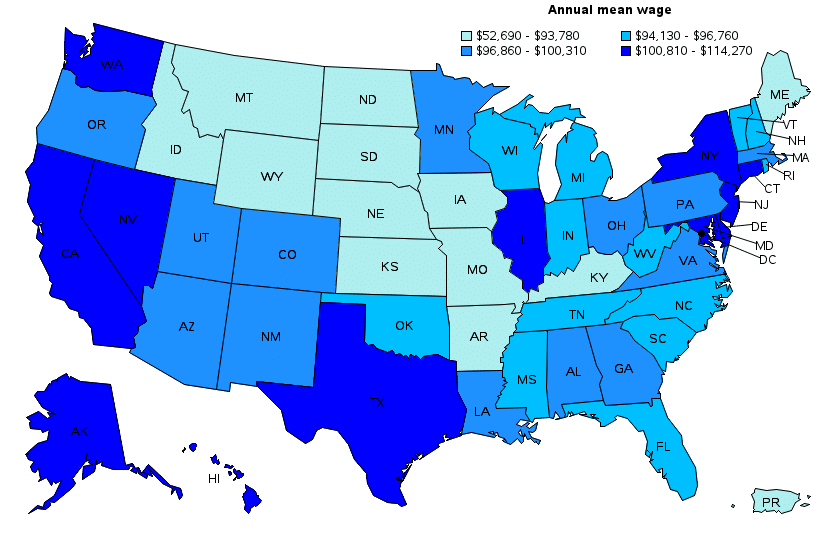
Source: www.bls.gov
2. Neurologist certification
This is a typical path to board certification in Neurology from the ABPN, which confirms completion of accredited training and passing a specialty exam. Board-certified neurologists gain access to specialized, high-paying roles in hospital and clinic settings.
- Certification: Neurology board certification from the American Board of Psychiatry and Neurology (ABPN).
- Duration: 4 years accredited residency + specialty exam (1-day exam, 10-year certification cycle).
- Certification fees: $2,500–$3,000 exam fee (ABPN standard).
- Average salary after certification: $280,000–$450,000/year.
3. Certified dental assistant (CDA)
The CDA certification validates skills in chairside assisting, infection control, and dental radiography. CDA-certified professionals gain access to specialized, high-paying roles in dental offices nationwide.
- Certification: CDA from the Dental Assisting National Board (DANB).
- Duration: 9-12 months accredited program or 3,500 hours experience + 3 exams (4-year certification cycle).
- Certification fees: $400–$500 for three exams (DANB standard).
- Average salary after certification: $42,000–$55,000/year.
4. Certified pharmacy technician (CPhT)
The CPhT certification validates advanced skills in medication preparation, dispensing, and regulatory compliance. CPhT-certified professionals gain access to specialized, high-paying roles in pharmacy settings.
- Certification: CPhT from the Pharmacy Technician Certification Board (PTCB) or NHA.
- Duration: 2-6 months self-paced training + exam (1.5-hour exam, 2-year certification cycle).
- Certification fees: $129 exam fee + $55 biennial renewal (PTCB standard).
- Average salary after certification: $38,000–$48,000/year.
5. Certified emergency nurse (CEN)
The CEN certification highlights expertise in emergency and trauma nursing. CEN-certified nurses gain access to specialized, high-paying roles in emergency care settings.
- Certification: CEN from the Board of Certification for Emergency Nursing (BCEN).
- Duration: 2+ years recommended ED experience + exam prep (3-hour exam, 4-year certification cycle).
- Certification fees: $350–$400 exam fee (BCEN standard).
- Average salary after certification: $85,000–$115,000/year
How to choose the proper certification for your career
Once you understand your objectives, planning your educational path becomes simpler. The market offers various roles you can compare based on professional healthcare certifications. These certifications enable professionals to advance their leadership responsibilities while they develop their clinical expertise.
The selection of career paths for healthcare professionals depends on their preferred patient population. You need to evaluate your personal time availability, your preferred learning style, and your future career objectives. Healthcare professionals achieve career growth by selecting appropriate healthcare certifications.
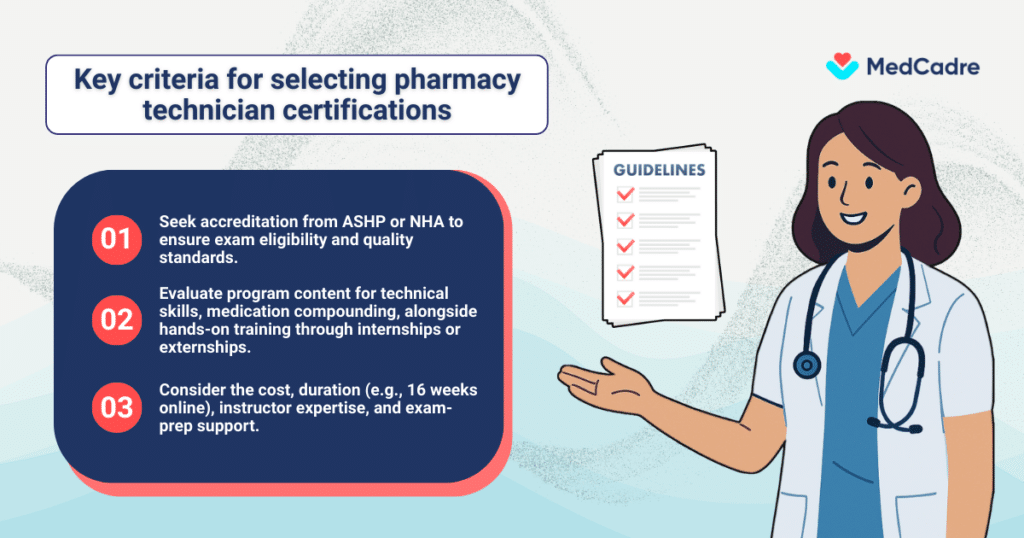
For example, if you are a pharmacy technician, then you must first verify accreditation and exam eligibility, then assess how well the program’s format fits your schedule and budget while ensuring it meets your state’s pharmacy board requirements for exams.
A detailed infographic has been added, and you can review the key points below to guide you in checking vital points when choosing a certification.
Benefits of choosing an innovative staffing platform for a better job
For any healthcare professional planning a job change or searching for a new role, earning strong certifications is a smart first step. The certifications help you create a unique professional identity, which, in turn, enables you to find work that aligns with your career objectives and offers greater financial compensation.
Certifications show employers that you are serious about growing your skills and delivering quality work, especially when exploring healthcare careers. However, certifications alone are not enough to secure the job you truly want. Achieving your career goals within the set timeline requires you to create a strategic plan for finding employment.
The free job platforms serve as the starting point for many professionals who discover that their listings contain unverified information, expired job openings, and duplicated advertisements. The system generates delays, which lead to miscommunication and lost opportunities.
Some candidates choose to work with traditional staffing agencies to make up for lost time, but they do so without conducting proper research. The agencies operate slowly and have restricted communication channels, leading to higher costs that reduce your take-home pay. The job requirements, together with the payment system, remain undisclosed in many situations, which creates problems for building trust and achieving long-term satisfaction.
Choosing a modern staffing platform like MedCadre helps you avoid these problems and secure your desired job at the right time and in the correct location. By staying connected with updated listings, you can also better identify roles that match healthcare jobs without unnecessary delays.
Here is how MedCadre supports your career journey :
- MedCadre’s flexible application process allows you to manage your job search while keeping up with your current responsibilities at your own pace.
- Our transparent pricing structure ensures that a significant portion of the billing rate goes directly to your compensation.
- The AI-driven platform speeds up credentialing by nearly 30%, helping you start your assignment on schedule.
- AI-integrated timesheets enable quick approvals, ensuring timely and accurate payments for every shift.
To stay ahead, regularly check the current openings page for newly posted opportunities. If you do not find a match today, you can also submit your resume to receive updates on roles that fit your goals and preferred location.
FAQs
Are certifications required for all healthcare jobs?
Not always. Some entry-level jobs may only require basic training or licensure. However, certifications can still help you grow faster in your career and make your resume stand out from other applicants.
Do healthcare certifications expire?
Yes, most healthcare certifications do expire. Each credential has its own renewal cycle, usually every 1–3 years, depending on the certifying body. Renewal often requires completing continuing education, submitting proof of practice hours, or retaking an exam.
Can high-paying certifications boost my income quickly?
Yes. Some programs are considered high-paying certifications because they help you qualify for roles that are in strong demand. For example, a registered nurse can earn more after completing an ACLS certification, as it prepares them for higher-level patient care in critical units.
How can MedCadre help me find the right healthcare job faster?
MedCadre connects you with vetted healthcare facilities nationwide and highlights roles that match your skills, certifications, and experience. You get quicker application turnaround throughout the hiring process, helping you land the proper role without delays.
Can I apply for jobs through MedCadre if I am a new graduate?
Absolutely. MedCadre works with many facilities open to hiring new grads across nursing, allied health, and support roles. If you are just starting, MedCadre helps you identify beginner-friendly positions and ensures your application stands out.