The field of healthcare is advancing at a rapid pace, and as a direct result, many people are seeking top-paying allied health jobs. Allied health professionals are at the center of this change, ranging from expert diagnosticians to therapy assistants. They play a vital role in providing quality care for patients while also supporting doctors and nurses. With an aging population and rising chronic illness, demand for specialists has never been higher.
Many people searching for top-paying allied health jobs are finding that there is a high demand and a wide range of opportunities available. This could not be a better time to explore job opportunities that offer stability, growth, and increased earning potential. In this blog, we will provide a variety of high-demand job descriptions as well as what makes them appealing for a career that lasts. Whether you are looking for new jobs or trying to find more growth in your current position, this blog will provide a roadmap for your career decisions.
What are some popular allied health career options?
Allied health careers encompass a broad range of career roles with the focus on diagnostics, technical jobs, therapy, and patient interaction. Unlike nurses and doctors, allied health professionals are trained in different areas that personalize and frame the delivery of more efficient healthcare. Discovering the different types of allied health jobs gives you a full understanding of the endless possibilities in the allied health sector. These jobs not only impact patient outcomes but also fill critical vacancies in the workforce. Whether you are ready to take the next step in your career or actively searching for “allied health jobs near me”, you will find opportunities that match your skills and long-term goals.
Why is there an increased demand for allied health professionals
The demand for allied health careers stems from multiple facets of healthcare and the need for patient-centered care. The first and most obvious factor is that there are severe shortages in some healthcare workforces, requiring trained professionals and specialists to keep systems running as smoothly as they can. Secondly, with specialization and technology growing in healthcare delivery, the shift toward specialized jobs has led the demand for diagnostic and therapeutic specialists to increase.
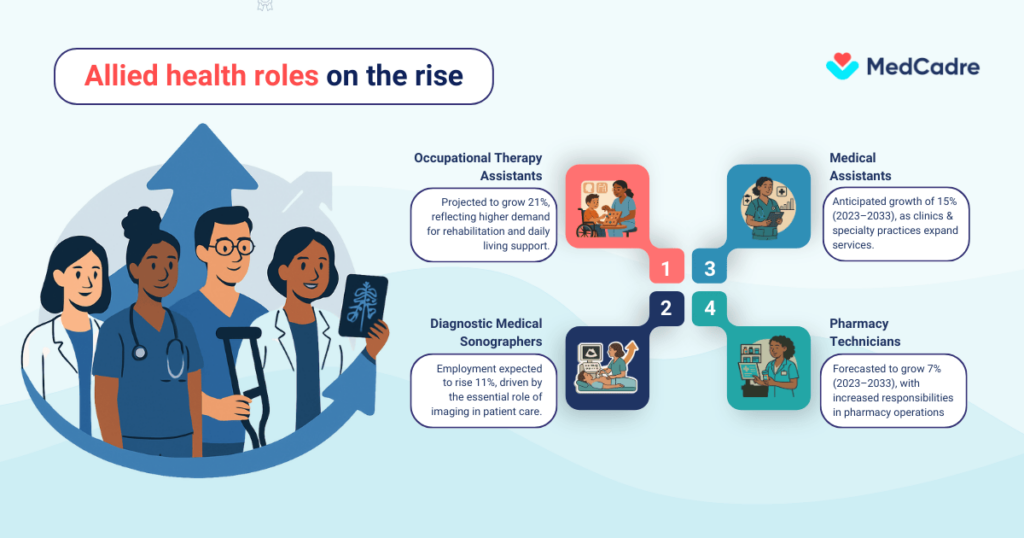
Allied healthcare is also expanding rapidly, with roles such as physical therapist assistants expected to grow by 19% according to the BLS, reflecting strong opportunities for those entering the field. Trends increasingly highlight the steady growth of allied health jobs in demand nationwide. Now more than ever, the medical landscape is continually shifting, and employers are actively seeking experienced professionals who can adapt quickly.
These trends underscore the importance of researching in-demand allied health careers, particularly if you are uncertain about your next career move. To clarify this further, a detailed infographic is included that explains a few additional allied health jobs projected to grow in the coming years.
Top 10 allied health careers in high demand
When examining the top-paying allied health jobs, it is helpful to note the job roles that offer the highest pay and the best job prospects. These careers additionally offer not just job satisfaction but career advancements and specialties that align with the skills you possess as a professional.
Many professionals are drawn to the fact that they can combine meaningful patient care with decent pay. They can also choose whether they want to work in a large hospital or a small clinic.
Whether you are looking for development, work-life balance, or an increased chance to expand your knowledge and skills, these careers ultimately provide a long-term advantage to you as a worker in the profession.
Here are 10 careers that are at the top:
- Medical laboratory technologist: Professionals in this role conduct laboratory tests that assist physicians in diagnosing diseases and creating effective treatment plans.
- Radiologic technologist: Individuals in this career perform imaging procedures such as X-rays, CT scans, and MRIs to support accurate medical assessments.
- Respiratory therapist: Practitioners in this field care for patients with breathing difficulties, managing conditions like asthma, COPD, and other chronic respiratory disorders.
- Physical therapist assistant: Team members in this position work under licensed physical therapists to help patients restore mobility, strength, and overall physical function.
- Occupational therapy assistant: Specialists in this role assist patients in improving daily living activities, motor skills, and work-related abilities to regain independence.
- Diagnostic medical sonographer: Takes ultrasound pictures that provide crucial information to a provider and/or medical doctor.
- Speech-language pathologist: Works with patients with speech, language, and swallowing difficulties.
- Medical and health services manager: Manages a hospital, healthcare, and/or department of care.
- Surgical technologist: Prepares and maintains sterilized instruments for surgeons, and supports the surgeons and operating team.
- Dietitian and nutritionist: Develops and implements dietary and nutrition programs to enhance health outcomes.
These roles reflect the growth in salaries for allied health jobs and highlight where demand is headed in the long run.
Utilizing your experience for better positions
Established professionals have an obvious advantage in pursuing advancement in allied health careers. By emphasizing competencies such as advanced certifications, leadership abilities, or specialized skills, all candidates are uniquely identifiable in a competitive job market.
When advancing into supervisory roles or specialty areas that bring greater recognition and higher pay. According to the BLS, job roles such as medical assistants earn a mean annual wage of $43,350. You can assess your experience to see which allied health careers are in demand as you prepare for the next stage of your career.
Transitioning and growing in your career requires the skills and readiness to secure top-paying jobs in allied health.
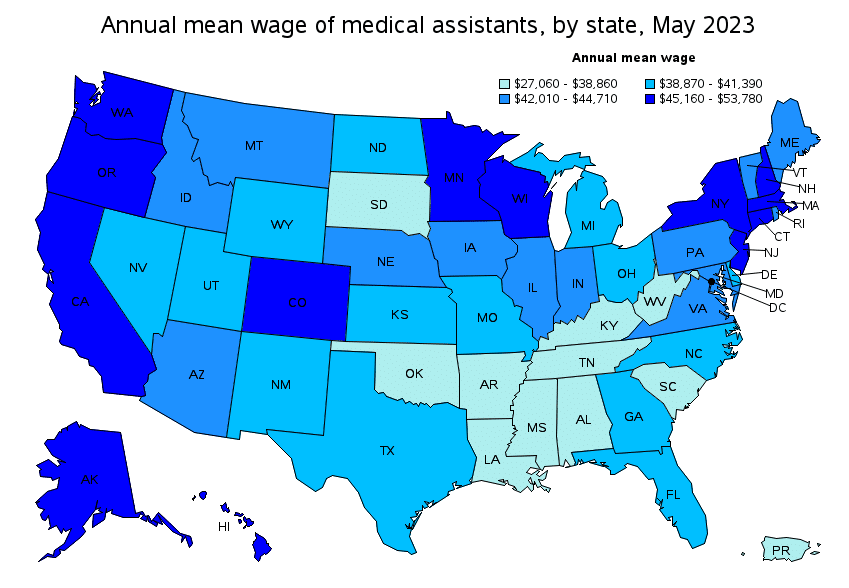
Source: www.bls.gov
Choosing the right platform for allied health job success
When building a long and prosperous career in the allied healthcare system, it is essential not only to consider which specialty to choose but also to identify where to find top-paying allied health jobs. While many allied health professionals begin by exploring job boards or staffing platforms, it is crucial to recognize that traditional staffing platforms operate very differently from modern staffing platforms.
Traditional platforms often come with drawbacks such as limited job visibility, slower response times, fewer individualized matches, and delayed payment processes. To avoid these drawbacks and secure a position that truly aligns with your skills, the most practical step is to partner with a modern staffing platform like MedCadre, a smart choice for healthcare professionals aiming to build a lasting career.
Unlike traditional platforms, MedCadre uses AI-based technology, collaborates with leading hospitals across the United States, and creates more opportunities to connect you with the best job match for your unique qualifications.
Some clear advantages of MedCadre include:
- A flexible application process that lets you manage your job search while balancing current responsibilities.
- A transparent pricing structure that ensures a greater share of billing goes directly to your compensation.
- An AI-driven credentialing system that speeds up the process by nearly 30%, helping you start your new assignment on time.
- Timesheet management that ensures accurate and prompt approvals, guaranteeing timely payments.
For the best experience, regularly check the current openings page to access various jobs or submit your resume, and our team of experienced healthcare recruiters will find one that suits your profile. MedCadre’s technology-driven platform empowers you to achieve success with speed, precision, and control.
FAQs
Do allied health jobs require advanced degrees?
Some positions, such as physical therapist assistants or medical assistants, require only an associate’s degree or certification, while more specialized careers, like speech-language pathologists or medical and health services managers, may require a bachelor’s or master’s degree for entry.
What skills are most valuable in allied health careers?
Key skills include strong technical expertise, effective patient interaction, problem-solving ability, and adaptability to healthcare technology, as well as teamwork and communication skills that enhance patient outcomes.
Do allied health jobs require certification?
Yes. Most allied health roles require certification or licensing, which can vary by state and specialty, ensuring that professionals meet quality and safety standards in their field.
How is MedCadre different from traditional staffing agencies?
Unlike traditional platforms, MedCadre uses AI-driven tools for fast, transparent, and personalized job matching, while also providing flexible application options and stronger connections with leading healthcare employers.
Is MedCadre available nationwide?
Yes. MedCadre connects professionals with healthcare facilities across the United States, offering access to a diverse range of job opportunities in various regions and specialties.