Healthcare travel jobs are becoming more popular across the United States. They give clinicians the chance to work in different locations, gain diverse experiences, and earn competitive compensation.
Contract healthcare jobs are unique because they are short-term assignments. They provide clinical professionals with flexibility. This allows them to work around their educational and professional objectives.
This blog will provide important considerations before accepting a travel contract job. These include contract readiness, credentialing, legal and malpractice issues, assignment complexity, and lifestyle adjustments. If healthcare professionals understand their options, they can make better choices. This helps them select assignments wisely and remain safe.
Learn more about travel and contract healthcare jobs
Healthcare travel jobs differ from per diem or permanent positions. They vary in duration, location, and employment structure, and can also enhance your resume.
Travel contract jobs typically last 8-26 weeks. They are offered in hospitals, clinics, or long-term care facilities. Contract healthcare jobs may be slightly longer or shorter, depending on the facility’s needs.
Common healthcare travel jobs include registered nurses (RNs), licensed practical nurses (LPNs), physical therapists (PTs), and respiratory therapists (RTs). However, there are many allied health opportunities, such as lab technician and radiology assistant roles.
Clinicians can apply for any travel nurse role as a contract job, including registered nurse (RN) roles, regardless of credentials or specialty. The benefits of these jobs include higher pay. Travel nurses, for instance, may earn between $45 and $70 per hour, depending on location and specialty.
These roles also provide exposure to different healthcare systems and offer greater scheduling flexibility.
Clinicians gain valuable experience and quickly strengthen their resumes. Nevertheless, challenges include relocating, job security uncertainties, and learning to integrate with a new team.
Also read: How to prepare a CV for a travel nurse job: top 5 must-haves
Licensing, credentialing, and documentation
Before accepting a role as a travel or contract healthcare professional, it is essential to confirm that you have proper licensure and credentialing. Contract healthcare roles require meeting both state and facility-specific requirements.
Credentialing ensures you can begin your assignment without delays and protects patient safety. Platforms often verify licenses and certifications, so staying organized prevents last-minute issues. A proactive approach demonstrates professionalism and reliability to potential employers.
Licensing
Many travel nurses rely on the Nursing Licensure Compact (NLC) to practice in multiple states. If you are not in a compact state, you will need an individual license for that state, so assessing requirements early is crucial.
For example, California is not an NLC state, so nurses planning to work there must apply for a separate California license and follow state-specific requirements.
Step-by-step credentialing process:
• Ensure all state licenses are active and up to date.
• Collect immunizations, background checks, and required certifications.
• Upload documentation through your staffing agency’s credentialing portal.
Pro tip:
Begin paperwork well in advance, as processing times vary widely by state. Being proactive ensures your start date is not delayed and demonstrates professionalism to the facility. In many regions, such as California, credentialing steps may include state-specific documentation, so researching requirements early helps avoid delays.
License Renewals
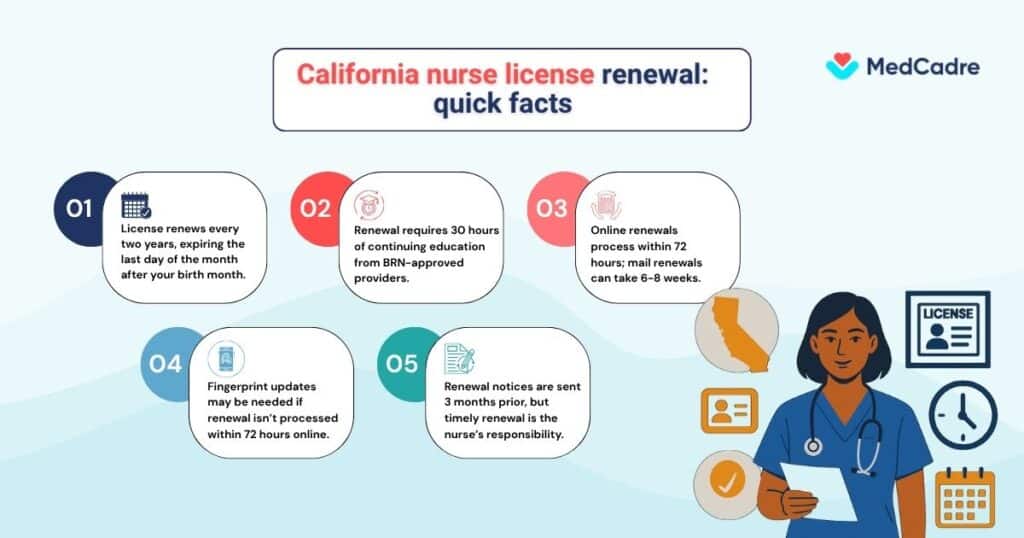
If you already hold an active license, you must renew it on time to maintain eligibility for travel or contract roles. Renewal rules vary by state, and if you plan to work in a new location, you must understand that state’s renewal timelines, CEU requirements, and regulations.
For instance, California has strict renewal and continuing education guidelines that all nurses must follow. A detailed infographic is provided to help you understand California license renewal facts and to stay fully compliant.
Legal, ethical, and safety considerations
Healthcare travel jobs often place clinicians in unfamiliar environments, including home care, making legal and safety awareness crucial. Understanding contract language reduces disputes and ensures fair compensation.
Compliance with HIPAA and OSHA standards protects both clinicians and patients. Ethical practice and understanding liability coverage build trust and safeguard professional reputations.
Reviewing contracts:
Examine cancellation policies, extension clauses, overtime rates, and breach-of-contract terms carefully.
Compliance essentials:
Maintain HIPAA and OSHA compliance when transitioning between facilities.
Malpractice and liability coverage
Check the agency’s coverage and determine whether personal malpractice insurance is necessary. This is especially relevant for travel nurses, who often handle high-risk procedures.
Workplace safety:
Assess facility ratings, emergency protocols, and area safety before relocation to ensure a secure and supportive working environment.
Ethical grounding:
Respect patient privacy, adhere to institutional policies, and practice within your scope in every state. Maintaining ethical standards preserves your professional reputation and ensures patient safety.
Lifestyle and housing logistics
Healthcare contractual travel jobs require significant lifestyle adjustments. Moving between assignments involves adapting to new coworkers, cities, hospitals, and facility policies.
Planning housing and travel arrangements early reduces stress. Maintaining self-care and mental wellness routines supports balance. Building local support networks ensures smoother transitions and more enjoyable assignments.
Housing options:
Consider agency-provided housing, Airbnb, short-term rentals, or platforms like Furnished Finder. Choose options that balance cost, safety, and proximity to work.
Travel logistics:
Pack efficiently, learn new hospital systems, and maintain continuity of care. Clinicians can apply as physical therapists (PTs), while adapting the workflow to each facility.
Work-life synergy:
Develop local support networks, prioritize mental wellness, take breaks, exercise, engage in hobbies, and maintain connections with family and friends to prevent burnout. Opportunities also exist for clinicians to apply as dietitians to gain diverse experience across healthcare settings
Pay packages, benefits, and taxes explained
Understanding your pay package is crucial when considering healthcare travel jobs. Compensation often includes hourly rates, overtime, per diems, and stipends. Reviewing each component prevents surprises. Before joining, you need to know the pay and details in different areas, especially if you are a social worker.
Tax planning and awareness of taxable stipends ensure you keep more of your earnings. Negotiating confidently helps maximize pay and professional development opportunities.
Understanding pay structure:
Travel and contract jobs include hourly rates, overtime, per diems, and stipends. For example, a social worker may earn a competitive hourly rate plus a housing stipend.
Housing and travel stipends:
Be aware of which allowances are taxable according to IRS rules and how they may impact your overall pay package.
Determining your tax home:
Your tax home affects eligibility for travel and housing reimbursement. Proper planning maximizes benefits.
Benefits comparison:
Compare health insurance, 401(k), PTO, and completion bonuses. Check if agencies provide mentorship or professional development programs.
Negotiation:
If your assignment extends or contract terms change, confidently negotiate your pay package. Knowing the travel or contract jobs market in your discipline, whether you are a social worker or another healthcare professional, gives you bargaining power.
A detailed infographic has been added to better understand pay packages, benefits, and tax considerations for healthcare travel-related jobs.
Annual wage of social workers in the USA by state
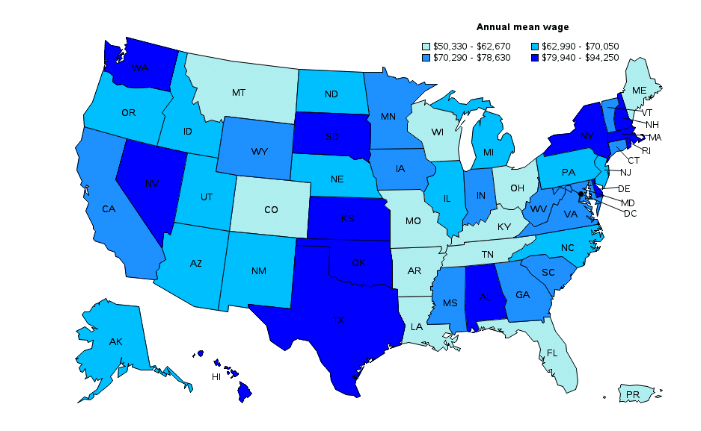
Source: www.bls.gov
Boost your travel and contract job prospects with a modern platform
When searching for travel or contract healthcare jobs, it is essential to evaluate key factors, such as licensing, credentialing, compensation packages, legal considerations, and lifestyle adjustments, before accepting an assignment.
Being prepared helps you secure the right role and ensures a smooth transition.
Relying solely on free job portals can be frustrating, as postings are often outdated or inaccurate and offer little support in navigating complex healthcare requirements.
Traditional staffing agencies also have drawbacks, including delayed placement, limited transparency in pay, and minimal guidance on credentialing or state-specific requirements.
Partnering with a modern and dedicated healthcare travel jobs platform, such as MedCadre, is a smart move. MedCadre offers multiple advantages.
A streamlined application and onboarding process helps you start faster. MedCadre provides clear compensation structures that ensure fairness and clarity.
AI-driven credentialing cuts delays and saves time, while direct connections to hospitals, clinics, and allied health recruiters nationwide simplify your job search.
These benefits simplify your job search, save time, and help you find assignments that fit your skills and career goals.
Through MedCadre, you can enjoy personalized job matching, efficient onboarding, and resources to ensure compliance and a smooth credential verification process.
Visit the current openings page to explore available roles, or submit your resume to have your profile reviewed and matched with ideal assignments. Using MedCadre ensures your job search is efficient, reliable, and supports your professional growth in healthcare travel jobs.
You can also discover rewarding jobs that match your skills and interests. Additionally, MedCadre helps you secure the right healthcare jobs to advance your career.
FAQs
How do contract healthcare jobs differ from travel jobs?
Contract healthcare jobs are short-term assignments with flexible durations, often based on facility needs. Travel jobs focus on temporary placements that may involve relocation and higher pay incentives.
Which professions can work in travel and contract healthcare jobs?
Common roles include RNs, LPNs, PTs, respiratory therapists, and many allied health positions, such as lab technicians and radiology assistants.
How long do travel healthcare jobs last?
Assignments generally last 8–26 weeks, but contract healthcare jobs may vary depending on the facility’s needs.
How quickly can I start an assignment with MedCadre?
With streamlined onboarding, AI-assisted credentialing, and direct employer connections, you can begin assignments faster than through traditional staffing agencies.
Can MedCadre help me find contract healthcare jobs outside my state?
Yes, leveraging licensure and credential verification tools, MedCadre helps clinicians locate assignments nationwide.